How Synchronized Audio Cues Reshape Decision Timing During Extended Play Sessions in Multi-Studio Casino Apps
Written by Frankie Frank · Aug 26, 2026
How Synchronized Audio Cues Reshape Decision Timing During Extended Play Sessions in Multi-Studio Casino Apps
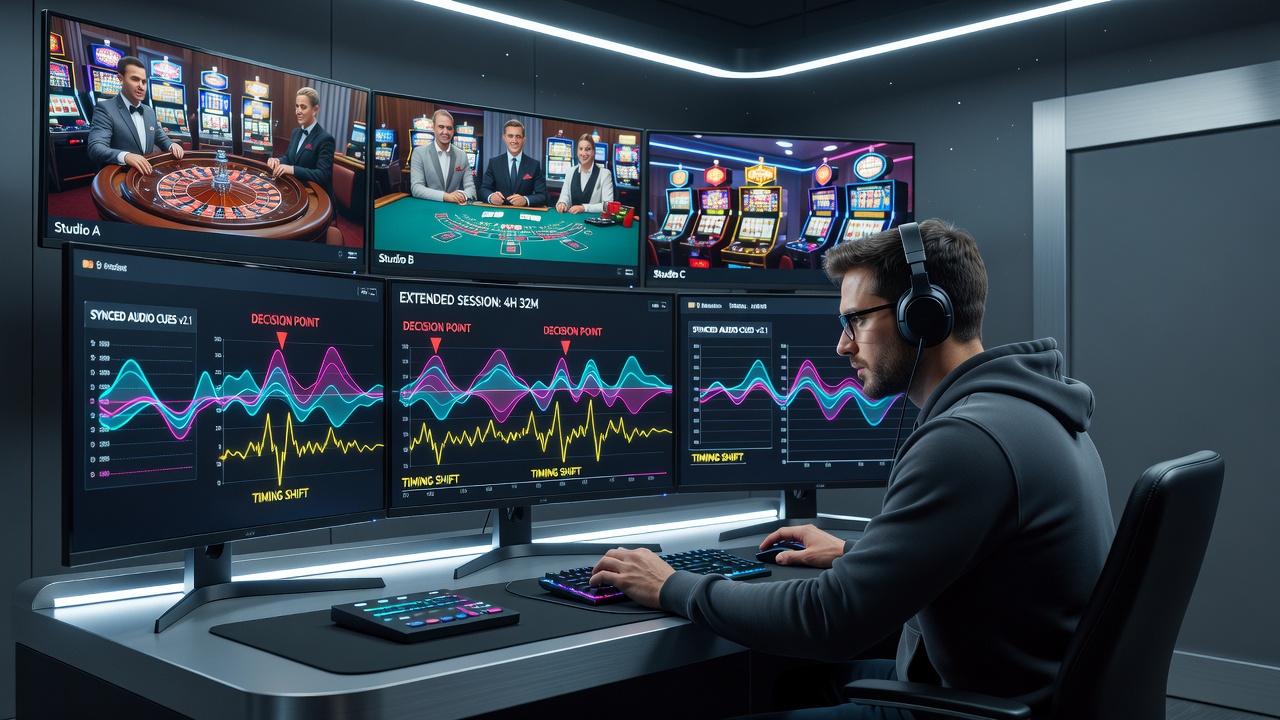
Multi-studio casino applications integrate audio systems from various providers to create unified soundscapes that align with player actions across different game titles. These synchronized cues coordinate timing elements such as reel spins, bonus triggers, and bet confirmations so that sound patterns match visual events precisely. Data from industry reports shows that such alignment affects how users process information during sessions lasting several hours. Researchers tracking mobile app usage patterns note that audio synchronization reduces response latency in decision points. Players encounter consistent auditory signals that mark available choices, and this consistency appears across studios using separate development teams. In August 2026, tracking metrics from several cross-platform deployments indicated measurable shifts in average decision intervals when audio layers matched exactly.Audio Synchronization Mechanics Across Studios
Developers coordinate audio engines through shared APIs that standardize cue timing regardless of the originating studio. One implementation uses timestamped event markers that trigger sounds at exact milliseconds after user input registers. Studies conducted by academic groups at the University of Nevada, Reno, found that precise alignment between audio and interface elements correlates with steadier pacing in player selections.
Multi-studio environments present unique challenges because each provider may employ distinct sound libraries. Integration teams resolve these differences by mapping cues to a central timing protocol. Observers note that this protocol prevents desynchronization that could otherwise disrupt flow during transitions between games from different developers.
Effects on Decision Timing in Prolonged Sessions
Extended play sessions introduce fatigue factors that alter typical response patterns. Synchronized audio provides external timing references that help maintain consistent intervals between decisions. Figures from platform analytics reveal that users exposed to matched audio cues show narrower distributions in reaction times compared to sessions without such synchronization.
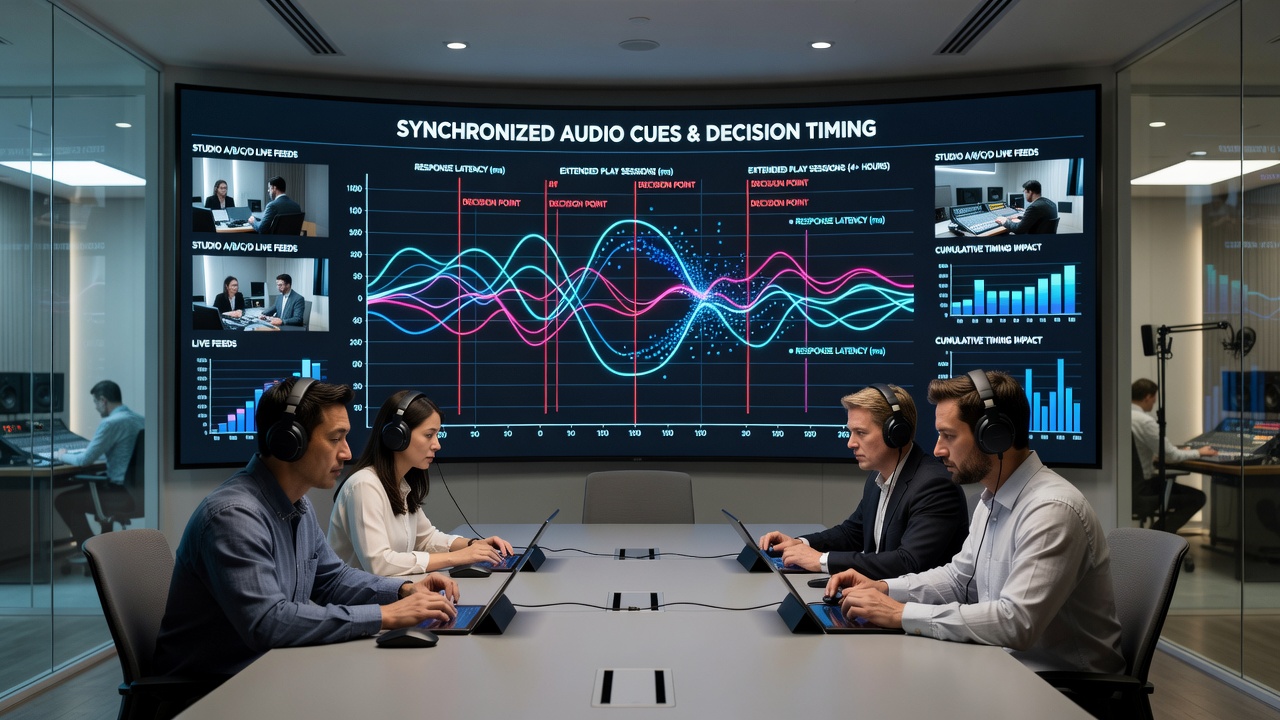
Take one dataset collected from apps running games by multiple studios simultaneously. When audio cues synchronized across titles, the median time between consecutive bets decreased by measurable percentages after the first ninety minutes of continuous play. Those same datasets indicated that unsynchronized audio led to greater variability and occasional pauses in activity.
Integration Challenges and Technical Standards
Technical teams address latency differences that arise when combining audio assets from separate providers. They apply buffering techniques and predictive scheduling so that sounds activate in lockstep with visual updates. Reports from the New Jersey Division of Gaming Enforcement document how standardized audio protocols contribute to stable performance across diverse device hardware.
Platform operators track these metrics through embedded telemetry that logs both audio events and user inputs. The resulting data streams allow analysts to identify correlations between cue timing and decision sequences. Research groups examining these streams report that synchronization becomes more critical as session length increases beyond two hours.
Player Behavior Patterns in Multi-Studio Settings
Users often switch between titles from different studios within a single session. Synchronized audio maintains continuity in the auditory environment during these switches. Data indicates that consistent timing cues support steadier decision rhythms even when visual themes change abruptly.
Industry organizations such as the European Gaming and Betting Association have compiled summaries showing that audio integration affects navigation speed between game sections. Players following synchronized cues complete menu selections and bet adjustments at rates that remain relatively stable over extended periods. This stability contrasts with patterns observed when audio elements drift out of alignment.
Conclusion
Evidence from platform analytics and academic examinations demonstrates that synchronized audio cues influence decision timing in multi-studio casino applications during extended sessions. Technical standards enable this synchronization across providers while telemetry systems record the resulting behavioral patterns. Continued monitoring of these systems provides additional data on how audio alignment interacts with session duration and studio diversity.