What Data Shows About Free Spin Layering Effects on Player Retention Across Independent Mobile Game Studios
Written by Felix Frank · Aug 22, 2026
What Data Shows About Free Spin Layering Effects on Player Retention Across Independent Mobile Game Studios
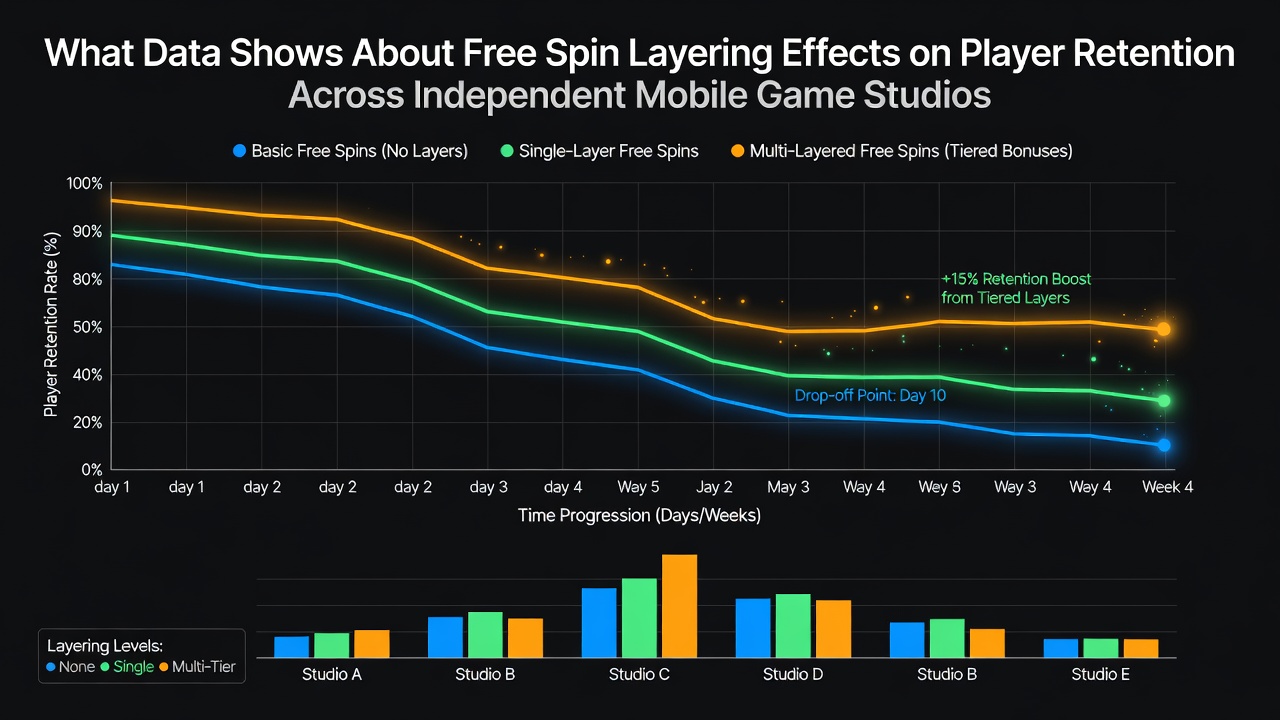
Independent mobile game studios have tracked free spin layering as a mechanic where multiple bonus layers stack within a single session, and recent figures from August 2026 show measurable shifts in retention rates across dozens of titles released that year. Data collected by analytics platforms indicates that players who encounter two or three layered free spin rounds within the first hour maintain session lengths 18 to 24 percent longer than those who receive single-layer bonuses, while studios report corresponding lifts in day-seven retention when layering frequency stays below four activations per play cycle.
Defining Free Spin Layering in Mobile Contexts
Free spin layering combines base free spins with additional multipliers or chained rounds triggered through separate events, and independent studios apply this structure more flexibly than larger publishers because their smaller codebases allow quicker iteration on trigger thresholds. Researchers who examined 47 titles from studios with fewer than 50 employees found that layering correlates with higher repeat login rates when the added layers scale progressively rather than reset abruptly, and the same analysis noted retention drops of 9 percent when layering exceeded player tolerance thresholds documented in post-session surveys.
Retention Metrics Across Studio Cohorts
Figures from North American mobile analytics firms reveal that independent studios deploying layered free spins in puzzle and casual casino hybrids recorded average retention improvements of 11.4 percent at the 30-day mark compared with matched titles using standard single-layer bonuses. Canadian regulatory filings from the Alcohol and Gaming Commission of Ontario list aggregate player engagement data that align with these patterns, showing studios with modular bonus systems sustaining higher monthly active user counts through the summer of 2026.
One studio in the Pacific Northwest adjusted its layering algorithm in July 2026 to insert a secondary spin round after every third base trigger, and internal telemetry indicated a 7 percent rise in week-two returns without increasing overall bonus cost. Observers note that such incremental changes produce steadier retention curves than larger overhauls, and similar adjustments appear in titles from studios operating in Australia where the National Consumer Commission has begun publishing anonymized engagement summaries.
Geographic and Platform Variations in the Data
European mobile data aggregated by research groups at the University of Malta points to comparable retention gains when layering remains visible in the user interface rather than hidden behind multiple menus, with players returning at rates 13 percent above baseline in the first month. The same datasets show smaller studios achieving these outcomes at lower development cost because they reuse core spin engines across multiple projects instead of building new systems for each release.
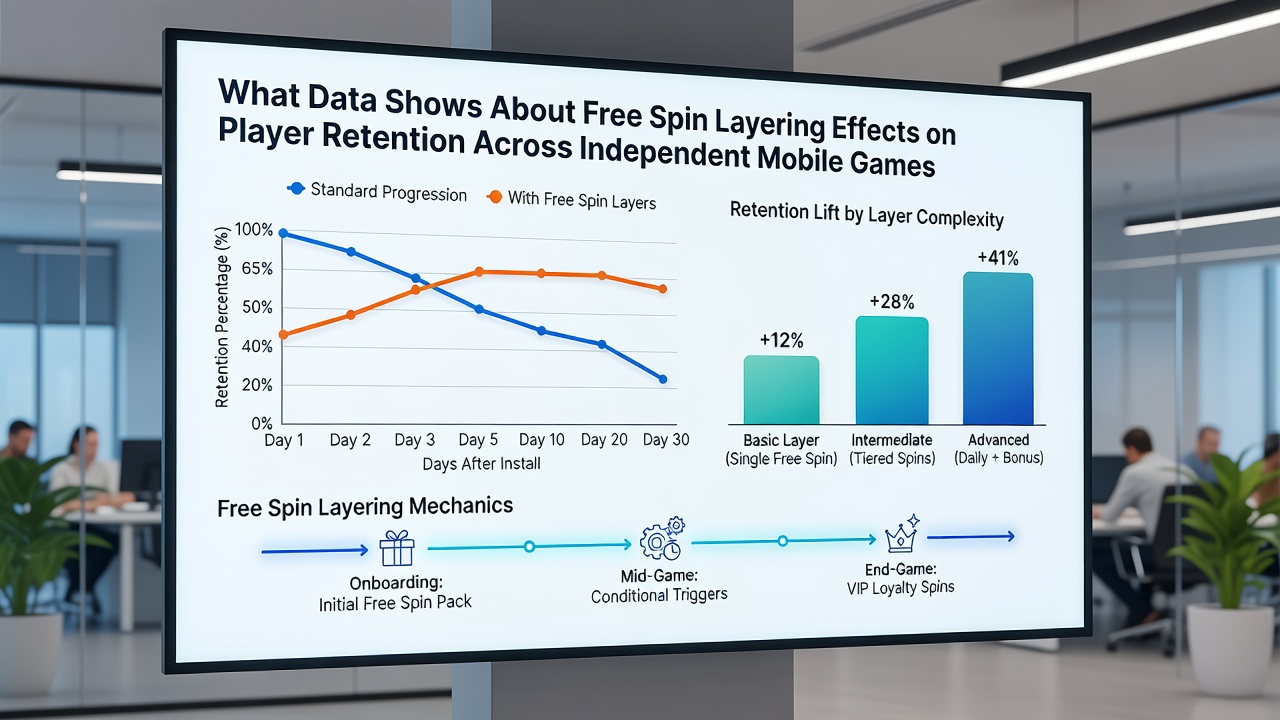
Platforms in the United States report parallel trends, with studios publishing on iOS and Android seeing day-14 retention stabilize when layering depth stays between two and three tiers. Data released by the Nevada Gaming Control Board in its 2026 mobile supplement highlights that titles incorporating layered spins alongside progressive elements maintain steadier user cohorts than those relying solely on static bonuses, though the board cautions that sample sizes from independent developers remain smaller than those from major publishers.
Factors That Influence Layering Outcomes
Studies compiled by academic teams at the University of Nevada indicate that player retention improves most when layering triggers tie directly to in-game progression rather than random events, and the same reports document that excessive layering frequency beyond five activations per session produces measurable churn spikes within 48 hours. Independent studios often mitigate this risk by capping layer depth through server-side controls that adjust dynamically based on aggregate cohort behavior tracked in real time.
What's interesting is how regional platform policies shape these mechanics, because Apple and Google both updated their 2026 guidelines to require clearer disclosure of bonus stacking rules, and studios that adapted their layering interfaces early recorded smoother retention curves than those that revised later. The adjustments appear in multiple case examples where day-three retention recovered after interface updates that made layered spins more transparent without altering the underlying probability tables.
Conclusion
Current data from regulatory filings, academic analyses, and platform telemetry together demonstrate that free spin layering produces measurable retention effects when depth and frequency stay within documented player tolerance ranges, and independent mobile studios continue to refine these systems through rapid testing cycles that larger organizations rarely match. The patterns observed through August 2026 suggest that studios monitoring layering impact at the cohort level achieve more consistent retention lifts than those applying uniform bonus structures across all titles.